The Robert L. Kane Postdoctoral Fellowship
The Robert L. Kane Postdoctoral Fellowships in Aging, Dementia, and Long-Term Care nurture scholars with strong substantive expertise/interests in long term care, healthcare systems and delivery, prevention and management of Alzheimer’s disease and related dementias (ADRDs), intervention design/development, systems innovation, health equity, and/or quality of care/quality of life among older adults and their family/professional caregivers. Methodological skills in one or more of the following areas are preferred: (1) experimental and observational designs; (2) intervention research; (3) quantitative methods; (4) qualitative or mixed-methods; (5) community-engaged research methodologies; (6) program or policy evaluation; and/or (7) implementation and dissemination.
Ample opportunities exist to develop an independent program of research in one or more of the areas above in collaboration with Joseph E. Gaugler, PhD (the Robert L. Kane Endowed Chair in Long-Term Care & Aging and Professor in the School of Public Health), Tetyana Shippee, PhD (Professor, School of Public Health), Eric Jutkowitz, PhD (Associate Professor, School of Public Health), Manka Nkimbeng, RN, MPH, PhD (Assistant Professor, School of Public Health) and many other faculty with expertise in aging. Fellows have the opportunity to join and seek mentorship from a diverse and vibrant group of research programs including:
- Dr. Gaugler’s Families and LTC Projects, whose mission is to generate and disseminate relevant, useful scientific knowledge about families who care for persons with memory loss;
- Dr. Shippee’s Long-Term Services and Supports (LTSS) Quality Lab, whose mission is to assess measures of person-centered quality for users of long-term services and supports and develop system-level solutions to address health equity;
- The Center for Healthy Aging and Innovation;
- The Establishing Mechanisms of Benefit to Reinforce the Alzheimer’s Care Experience (EMBRACE) AD/ADRD Roybal Center;
- The State Alzheimer’s Research Support (StARS) Center;
- The BOLD Public Health Center of Excellence on Dementia Caregiving;
- The Center for Learning Health Systems;
- The School of Nursing’s Center for Aging Science and Clinical Innovation (CASCI);
- The Life Course Center;
- N. Bud Grossman Center for Memory Research and Care;
- Minnesota Northstar Geriatric Workforce Enhancement Program;
- The Center for Community Engaged Rural Dementia and Alzheimer’s Research; and
- A wealth of other opportunities afforded by the University’s Clinical and Translational Science Institute (UL1TR002494, KL2TR002492), the Building Interdisciplinary Research Careers in Women’s Health (BIRCWH; K12HD055887); and many others.
Required qualifications include: a) Earned doctorate, or international equivalent; b) Evidence of productivity in a defined area of research and scholarship; c) Effective written and oral communication skills; d) Effective interpersonal and organizational abilities, and; e) Demonstrated commitment to promoting a diverse, inclusive and respectful workplace.
Preferred qualifications include: a) Recognition in an area of scholarship; b) Experience securing external research funding; and c) A substantive research publication record.
We are not accepting applications at the moment. Please check back for updates.
Announcing the 2026-2028 Fellows
Andrew Alberth joined the Center on Healthy Aging and Innovation after completing his Ph.D. in Gerontology at the University of Massachusetts Boston. Andrew’s research interests and prior work aim to understand how broad policies and personalized interventions may address barriers to health, wellbeing, and care for all older adults. His work is grounded in a commitment to health equity and informed by interdisciplinary perspectives spanning health policy, aging, and organizational behavior. Andrew has experience conducting large-scale data analysis, developing policy-relevant research questions, and translating findings into actionable insights for stakeholders, including healthcare providers, consumers, and policymakers.
What led you to apply to the Robert L. Kane Postdoctoral Fellowship?
Andrew was inspired by the Kane Fellowship’s research priorities that overlap with his interests, including a focus on systems innovation, policy implementation, and person-centered, equitable care for current and future aging populations. The opportunity to collaborate with interdisciplinary scholars leading the way in caregiving, equity-focused care quality measurement, health delivery systems, and community-engaged dementia research offers an ideal environment to refine and expand his work towards improving how policies and practices are implemented and experienced by older adults.
What are some of the projects you plan to work on while a Fellow? What do you hope to achieve?
Andrew plans to focus on four interconnected skill areas during his time as Fellow: (1) applying advanced mixed-methods designs and community-engaged approaches to evaluating policy and care models; (2) exercising leadership in long-term care policy and quality measurement research; (3) translating evidence into sustainable practice through expertise in implementation and dissemination science; and (4) grant making, including preparing competitive NIH/NIA K- and R-series proposals. The Robert L. Kane Postdoctoral Fellowship provides an ideal training environment to pursue these goals through mentorship from leading investigators in long-term care systems innovation, implementation, and health equity.
What are some of your professional and academic goals after the Fellowship ends?
Andrew’s long-term career goal is to become an independent scientist and national leader in long-term care and aging policy research. He aims to build a research program that advances health equity and improves how policies and care models are designed, implemented, and experienced by older adults.
Originally from Los Angeles, California, Karah Alexander earned her PhD in nursing from Emory University with a focus in gerontology and health literacy. She is a proud alumna of Spelman College, where she earned her BA, and holds an MPH and a graduate certificate in Health Literacy from Georgia State University.
Her research focuses on health literacy and medical discrimination among Black dementia caregivers. She also has extensive experience in intervention research, particularly in caregiver psychoeducation programs. One program especially meaningful to her is Caregiving While Black – a novel, culturally tailored caregiving program that she helped develop and refine, and now works on its adaptation into a community facilitator model, enabling Black community members to facilitate the course for Black caregivers.
Karah is deeply committed to advancing racial equity and community empowerment by dismantling myths about health literacy and dementia, and by increasing brain health knowledge and dementia literacy in community settings. She is especially dedicated to equipping older Black adults and their families with the knowledge, tools, and culturally grounded resources needed to navigate healthcare for both them and those for whom they care.
Outside of her professional work, Karah enjoys cycling and spending time with her two young sons, her longtime partner, her dachshund Gigi, and her close-knit extended family and friends.
What led you to apply to the Robert L. Kane Postdoctoral Fellowship?
My background in public health and work in dementia caregiving led me to engage with the BOLD Public Health Center of Excellence on Dementia Caregiving (PHCOE-DC), which was the first learning community I experienced focused on building public health infrastructure to support dementia caregivers. Through attending webinars, I became familiar with their extensive work, initiatives, and professional network. I also had the opportunity to learn from and interact with past RLK Fellows, which sparked my interest in joining this collaborative research environment that supports professional growth aligned with my goals. Applying to the RLK Fellowship felt like the natural next step, offering the opportunity to further strengthen my methodological skills in caregiver intervention development and evaluation, and advance my long-term goal of becoming an independent researcher in aging.
What are some of the projects you plan to work on while a Fellow? What do you hope to achieve?
During the fellowship, I plan to collaborate with the BOLD Center’s existing programs and explore strategies for integrating comprehensive health literacy principles and health insurance literacy into dementia caregiving initiatives. In parallel, I aim to strengthen my grant writing by developing proposals to expand the 100 Minds Memory Screening Project, which I lead, intending to reduce persistent gaps in the formal diagnosis of cognitive impairment and promote brain health awareness in African American communities. I will also continue conducting intervention research with the Caregiving While Black course, specifically advancing its adaptation from a researcher-led, hybrid model to a community-based facilitator model, equipping Black community members to deliver the program to Black caregivers.
What are some of your professional and academic goals after the Fellowship ends?
After the fellowship, I aim to establish an independent program of research focused on caregiver health literacy and health insurance literacy. A central goal is to develop or adapt an existing intervention that creates a supportive space for caregivers to build practical skills and ask questions, around navigating healthcare systems and health insurance policies on behalf of the person they care for. I also aspire to hold a dual faculty appointment, including a position at an HBCU to expand exposure to aging and gerontology to HBCU students and contribute to building stronger pipelines into dementia caregiving research and practice, given the limited presence of gerontology-focused programs or general understanding at many HBCUs.
Natalie a social worker and gerontologist whose research focuses on health equity, aging and disability policy, and long-term services and supports (LTSS), with particular emphasis on Home and Community-Based Services (HCBS). Most recently, Natalie completed a project using policy documents and CMS administrative claims data to examine how state policy decisions on the design and generosity of Medicaid HCBS affect service use and health outcomes for older adults. Natalie’s long-term goal is to generate research that informs policy change and advances more equitable, responsive, and relevant LTSS. Her dedication to this research stems directly from my experiences as a gerontological social worker in an outpatient neurology clinic specializing in Alzheimer’s disease and other dementias. While each patient and family experience was unique, the challenges they faced navigating aging service systems felt universal and pervasive. Too often, I met families who had gone years without needed supportive services because of difficulty navigating complex Medicaid HCBS programs. Yet, in the same breath, they would emphasize that these programs were their only affordable option for care. Hearing story after story that highlighted the same systemic gaps—disproportionately affecting women, immigrants, and older adults of color—led Natalie to pursue a research career focusing on aging, health equity, and LTSS policy. Natalie earned her PhD at the University of Washington School of Social Work and received both her bachelor’s and master’s degrees in social work from the University at Albany, State University of New York.
What led you to apply to the Robert L. Kane Postdoctoral Fellowship?
What led me to the Robert L. Kane Postdoctoral Fellowship was a combination of substantive fit, unique data and research opportunities, and mentorship directly aligned with my long-term research agenda. My work focuses on how state long-term services and supports (LTSS) and Home and Community-Based Services (HCBS) policy design shapes access, use, and health outcomes for older adults, particularly through a health equity lens. That focus maps directly onto the Fellowship’s emphasis on long-term care systems, person-centered quality, and disparities among older adults and family caregivers. This Fellowship also offers the opportunity to access data resources, such as Medicaid and Medicare claims and the NCI-AD, that are essential for the next stage of my work. Additionally, I am drawn to the faculty mentorship and ongoing projects led by Drs. Gaugler, Shippee, Jutkowitz, and Nkimbeng. I see a clear overlap between my research on HCBS design, Self Direction, and disparities and their work on HCBS quality, use patterns, and family caregiving. The opportunity to both contribute to their existing projects and develop my independent research agenda is exactly what I am looking for in a postdoctoral fellowship. Finally, the strong engagement that faculty have with state and community partners is critical for how I want my research to function. My practice background as a social worker showed me that policy relevance requires sustained relationships with agencies and communities. This position will allow me to formalize those skills while strengthening my methodological training and preparing me well for a tenure-track role at an R1 institution.
What are some of the projects you plan to work on while a Fellow? What do you hope to achieve?
There are several projects I plan to work on while a Fellow. One project will build on my existing work on Self Direction. Self Direction is a type of HCBS that grants participants more control over their long-term care. It exemplifies the type of responsive, person-centered LTSS policy I aim to advance—one that has demonstrated benefits for users and families but remains underutilized, particularly among older adults, suggesting policy barriers may be limiting equitable access. This project will examine the use of Self-Direction and health/quality of care outcomes using NCI-AD merged with claims data. I will also use the multi-state NCI-AD data to analyze differences in Self-Direction utilization patterns across states. I also plan to build on Dr. Tetyana Shippee’s work examining place-based and state policy factors associated with HCBS quality and unmet need and their implications for racial disparities. Additionally, I plan on contributing to Dr. Eric Jutkowitz’s work identifying how HCBS use patterns among LTSS recipients relate to health outcomes and their demographic and contextual correlates. And, given my clinical background and prior dyadic intervention experience with people living with dementia and their care partners, I welcome opportunities to support intervention research within the Families and LTC Projects.
As far as what I hope to achieve, I have three main goals for this Postdoctoral Fellowship. First, I aim to develop methodological expertise in analyzing survey and administrative datasets using causal inference methods, multilevel modeling, and other approaches for complex data structures. I will also seek mentorship in integrating community-engaged research practice and qualitative methods with administrative data analysis to strengthen my mixed methods research approach. Second, I seek to expand my body of policy-relevant LTSS research and build strong collaborative research partnerships. Third, I am to use this postdoctoral training to acquire the skills and experience necessary to write a competitive NIH K-series grant application.
What are some of your professional and academic goals after the Fellowship ends?
My ultimate goal is to generate research that leads to responsive, relevant, and just LTSS policies that promote health equity among older adults. After the Fellowship ends, I plan to continue pursuing this goal in a tenure-track faculty position at an R1 institution, where I will build a federally and state-funded research program that advances understanding of how state HCBS policy design shapes equitable access and outcomes for older adults. This work will equip policymakers with actionable evidence for designing HCBS systems that better serve older adults and reduce inequities in access to HCBS. My practice experience as a social worker working with older adults navigating LTSS and HCBS systems motivates this research agenda and continues to shape my work. I pursue this research in service of the families I worked with who navigated these systems.
2024 Fellow
I am a tenure-track Assistant Professor in the Department of Speech, Language and Hearing Sciences at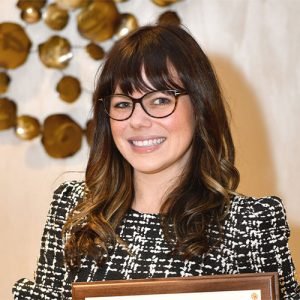 Indiana University Bloomington. At Indiana University, I direct the Amplification and Healthy Aging (AHA!) Laboratory, where my research focuses on tailoring and individualizing hearing service delivery to improve hearing aid uptake and acceptance among older adults with hearing loss, with particular emphasis on using over-the-counter amplification to reduce cost and access barriers to hearing care. I am especially interested in optimizing hearing services for older adults traditionally underrepresented in hearing aid research, including those with physical and cognitive differences, as well as individuals from rural areas and minoritized backgrounds. A key area of my work investigates strategies for tailoring hearing devices and their associated services to better support older adults with co-occurring dementia and hearing loss, as well as their family caregivers. Underpinning my work are methodological interests in qualitative research, mixed methods, intervention science, implementation science, and community-engaged research.
What have you accomplished during your time as an RLK Post-Doc?
My time as an RLK Post-Doc was brief, as I secured a tenure-track position early in my fellowship. However, the RLK Post-Doc was the culmination of several years of working with Drs. Gaugler and Shippee and the Center for Healthy Aging and Innovation (CHAI) throughout my PhD at the University of Minnesota, first as a CHAI-sponsored Interdisciplinary Doctoral Fellow and then as a Doctoral Dissertation Fellow. I owe much of my success on the job market to the training and mentorship I received through CHAI and as an RLK Post-Doc.
Much of my time as an RLK Post-Doc was dedicated to interviewing for academic jobs and preparing my materials. I was fortunate that the fellowship afforded me time to focus on interviews, as well as training and access to peer mentorship that greatly improved my application materials. However, when I wasn’t interviewing, I still had ample opportunity for research productivity thanks to the mentorship and resources afforded by the RLK Post-Doc. During my fellowship year, I participated as a K07 fellow in Dr. Gaugler’s Advanced Behavioral Intervention Design concentration and published a first-authored manuscript on unmet hearing aid need in people with dementia in JAMDA with Dr. Tetyana Shippee’s research team. I also submitted a co-authored paper on long-term care financial planning with Dr. Marti DeLiema’s research team, as well as a co-authored paper on fostering emphasis on dissemination science with Dr. Allison Gustavson and members of CHAI’s Dissemination Special Interest Group. Additionally, I continue to collaborate with Dr. Gaugler and Dr. Shippee’s research teams in my faculty position. With Dr. Gaugler’s team, I am a co-author on a process evaluation manuscript, and with Dr. Shippee’s team, I will submit two first-authored manuscripts on telehealth use among older recipients of publicly funded home and community-based services. Additionally, as an RLK Post-Doc, I developed and refined the aims of a grant submission which forms the basis of an R21 I plan to submit in my faculty role.
How much has the RLK Post-Doc meant to you and your career?
This fellowship, along with the totality of my time with the Center for Healthy Aging and Innovation, has fundamentally changed my perspective as a researcher. I no longer primarily view myself as an audiologist scientist researching hearing aids, but rather as an audiologist gerontologist researching how to support the overall health and well-being of older adults through the provision of hearing aids. This distinction has been meaningful for my career and has fundamentally shaped my research questions and the ways in which I advocate for the importance of my work. Additionally, I have gained a full toolbox of research methods, including mixed methods, intervention science, and implementation science, which I now regularly include in my work—and which I’ve already had the privilege of sharing with my graduate students. Finally, I gained a mentorship and peer network that extends well beyond the RLK Post-Doc and has already helped and supported me in numerous ways as I embark on my new faculty role.
2022-2024 Fellow
I am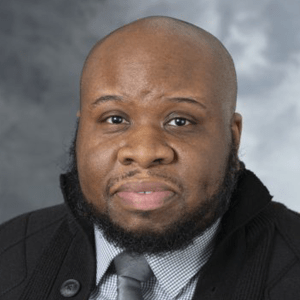 an Assistant Professor of Social Work at the University of Pittsburgh. I received by PhD in clinical investigation from the University of Wisconsin-Madison, my MSSA from Case Western Reserve University, and a Bachelor of Arts in sociology and social welfare from Marquette University. Overall, my career goal is to become a leading social work scientist with the aim of increasing the adoption of effective culturally responsive interventions for persons with Alzheimer’s disease and related dementias (ADRD) and their caregivers. My program of research examines the influence of life events, social position and Social “ISMs” (i.e., racism, ageism, ableism) on health and wellbeing across the lifecourse, experiences utilizing clinical and community services, and mechanisms that under interventions and implementation processes. I have advanced training in clinical trials, qualitative research methods, and behavioral intervention design. I currently lead two projects focused on the development of inter-generational ADRD interventions among Black and Latinos communities. I plan to test and disseminate ADRD interventions that can be translated into practices and policies that strengthen ADRD structural supports and improve the health and wellbeing for persons with ADRD and their caregivers.
What have you accomplished during your time as an RLK Post-Doc?
The fellowship has been immensely powerful toward honing my skills as an independent investigator and supporting my transition into a faculty role at top university within my discipline.
Funding and Research Leadership: I received grant funding as a Multiple Principal Investigator (MPI) from the Life Course Center at the University of Minnesota to examine the perspectives and experiences of Black older adults with healthy aging, racism and resistance strategies. The project aims to develop a racially-contextualized measures of racisms and has sparked peaked interests in the development of an intergenerational program to improve social and cultural connections across the life course. I am also leading a project that documents the co-design of a dementia respite care intervention with Latinos. Both projects will be the focus of future extramural funding proposals to the National Institute on Aging and the Alzheimer’s Association. Beyond these two projects, I have led multiple analytic teams across various ADRD care related topics (i.e., embedding a caregiver support intervention into adult day services, examining lucid events in late-stage ADRD). I will serve as a Co-Investigator for my expertise in qualitative research methods experts on several forthcoming NIA funded research proposals. I am well positioned to successfully launch my program of research.
Publications and Specialized Training: During my fellowship, I have published findings on three separate qualitative studies and have at least eight other publications under development including co-authorship of a book chapter on the use of mixed methods research to support behavioral intervention design with Drs. Laura Gitlin and Sara Czaja. I also served as a Fellow with the Advanced Behavioral Intervention Design Concentration with a focus on dementia interventions across the lifecourse.
How much has the RLK Post-Doc meant to you and your career?
This fellowship has provided me with the breadth of experiences to effectively lead multiple research teams and projects simultaneously, mentor doctoral students, and build research partnerships with community organizations. I was provided with the space to advance my scholarship and continue my clinical and community practice contributions. Joe and Tetyana have been thoughtful and supportive mentors, taking every opportunity to prioritize my development as a person and a scholar.
2019-2021 Fellows
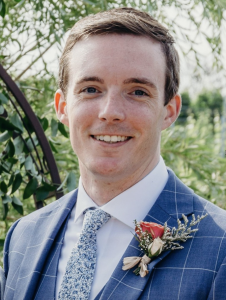
My aim is to better understand, develop, evaluate, and disseminate technological tools and psychosocial resources that help caregivers and persons with dementia to thrive during and after the dementia caregiving process. This is accomplished through advanced methods (e.g., interventions, longitudinal studies, event momentary assessment, dyadic data collection), statistics (e.g., multilevel modeling, structural equation modeling, response surface analysis), psychological theory/perspectives (e.g., self-determination theory, attachment theory, positive psychology), and other methods (qualitative, mixed, and community-engaged). I am currently funded through a career development award from the National Institute on Aging, focused on former dementia caregivers (K99 AG073463) and convene the Supporting Dementia Caregivers After Death Community Advisory Board.
What have you accomplished during your time as an RLK Post-Doc?
Comparing my CV now to my CV when I applied to be an RLK Post-Doc reveals some stark contrasts. I have double the publications (10 → 20), more than seven times the citations (56 → 431), and more than 14 times the funding as Principal Investigator from the National Institutes of Health ($68,044 → $996,961). I have published with many top researchers in some of the most prestigious journals in the field and in science more broadly. I have even built a Community Advisory Board of former caregivers, clinicians, healthcare administrators.
How much has the RLK Post-Doc meant to you and your career?
When I was accepted, I told everyone that this was my dream postdoc. The RLK postdoc was my top choice, but sometimes reality doesn’t live up to high expectations. In the case of the RLK postdoc, reality exceeded my high expectations. The format of the postdoc was perfect: dual mentors and dual mentees traveling a similar journey. Tetyana and Joe have been advocates for me in both career and personal life. They ensured I maintained work-life balance while encouraging every new research idea or grant opportunity that appealed to me. They incessantly opened their Rolodexes and introduced me to dozens of scholars in the field. They exposed me to new ideas and challenged me to think deeply about what sort of scholar and mentor I wanted to be. All of this while providing years of protected time. It feels like no exaggeration to say that becoming an RLK postdoc has been the single most positive and pivotal choice I have made for my work and my career.
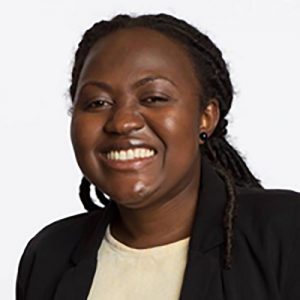
I am an assistant professor at the University of Minnesota School of Public Health. Prior to that, I was a Robert L. Kane Postdoctoral Fellow in the same division. I received my PhD in nursing from Johns Hopkins School of Nursing, my MPH from Boston University School of Public Health and a Bachelor of Science in nursing from the University of Massachusetts Amherst. My research centers around understanding the causes of health inequities in minorities and improving health outcomes for older adults. In partnership with the African Career, Education & Resource (ACER) Inc., I am currently leading two projects with African immigrants in Minnesota. These projects seek to understand African immigrants’ dementia care, caregiving and education experiences and needs. Encompassing my research and policy expertise, I plan to adapt and test interventions that can be translated into health policies and practice to improve health and eliminate health inequities for older adults.
What have you accomplished during your time as a RLK Post-Doc?
This fellowship made it possible for me to dedicate 100% of my time to research and I believe it accelerated my career growth. I was able to leave my postdoctoral fellowship early to begin a tenure track faculty appointment at the University of Minnesota School of Public Health. Below, I describe my funding and publication successes:
Funding: I received 3 grants to support my research during the fellowship. I received pilot funds from the Johns Hopkins Alzheimer’s Disease Resource Center for Minority Aging Research (JHAD-RCMAR) to develop a culturally tailored dementia education program for the African immigrant community. This project; the African Immigrant Dementia Education Project that built on the African Immigrant Memory Loss project received two concurrent pilot awards, but one was rescinded. Secondly, I was invited by my community partner to serve as a technical expert and evaluator for the African Career Education Resources (ACER) Inc’s COVID Community Coordinator for the African American and African immigrant community that was funded by the Minnesota Department of Health. This project enabled me to continue building trust and building the community partner’s research capacity.
Also, I currently have two grants under review at the National Institute on Aging (NIA) that were developed primarily during the fellowship. I am an expert on the “Diverse Interdisciplinary Geriatrics Research Training Program (NIA R25), where we plan to develop introductory geriatric and gerontology training for racial/ethnic minority undergraduate students. The second is my (K01) where I plan to obtain training in cultural adaptation and feasibility testing of behavioral interventions. Both grants have received favorable scores and we are currently awaiting council review.
Publications: To date, I have 33 peer-reviewed articles published; 9 of them were published during the 18months of my postdoctoral fellowship. Many of these articles are published in journals that are widely-read and highly relevant in the fields of geriatrics, gerontology, nursing and immigrant health including the Journal of Applied Gerontology, Geriatric Nursing, Journal of Immigrant and Minority Health, Ethnicity & Health, and Journal of Professional Nursing. I also authored a non-peer reviewed newsletter article, and a book chapter titled “Diverse, Culturally Rich Approaches to Family Care in the United States in Bridging the Family Care Gap, edited by Dr. Joseph E. Gaugler during this time.
How much has the RLK Post-Doc meant to you and your career?
A mentor once said that the postdoctoral fellowship gives you the time and opportunity to gather momentum, so that you can begin a faculty appointment on very strong footing. This was one of the reasons why I pursued a postdoctoral fellowship and I think this is what happened in my career trajectory. During the fellowship, I was able to focus my time solely on research and gained more collaborators and community partnerships that enabled me to publish more, finalize my K01 application and ultimately obtain a tenure track faculty appointment.